Losing a few teeth can feel overwhelming, especially when it affects your ability to smile, speak, or eat with confidence. But if you’re dealing with missing upper teeth, upper partial dentures might be the solution you need. They’re a practical, affordable way to restore your smile without going through extensive surgeries.
For Medicaid-eligible patients, understanding your options for dentures with Medicaid is crucial in finding care that fits your needs and budget. At The Denture Company, we specialize in guiding patients through this journey, providing compassionate, cost-effective care when it matters most.
What Are Upper Partial Dentures?
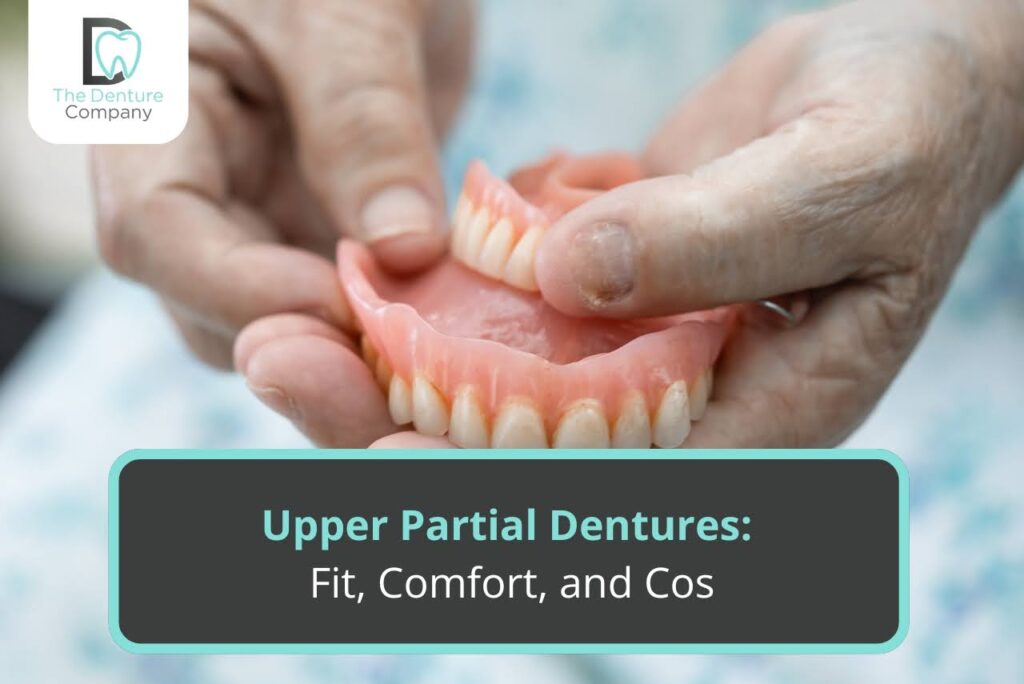
Upper partial dentures are removable dental appliances designed to replace missing teeth in the upper arch of your mouth. Unlike full dentures, which replace an entire row of teeth, partial dentures fill gaps where natural teeth are still present. They’re custom-made to fit comfortably and blend in with your existing teeth, improving function and aesthetics.
According to the American Dental Association (ADA), partial dentures are often recommended when several teeth are missing but healthy teeth remain. This helps maintain the natural alignment of your bite and prevents surrounding teeth from shifting.
Types of Partial Dentures: Flexible, Permanent, and More
There are several types of partial dentures available depending on your dental needs and preferences. Flexible partial dentures are lightweight and made from soft, gum-colored materials that adapt easily to the shape of your mouth. For patients needing a more stable, long-term solution, permanent partial dentures or implant-supported dentures might be the better choice.
Permanent denture implants involve securing dentures with dental implants embedded into the jawbone. This provides superior stability compared to removable options. The Cleveland Clinic highlights that denture implants are an effective solution for patients looking for a secure, natural-feeling alternative to traditional dentures.
Medicaid Coverage for Partial Dentures
One of the biggest concerns for patients is affordability, especially for those relying on Medicaid. Coverage varies by state, but many Medicaid programs include essential dental services like partial dentures. Understanding what’s covered under your state’s Medicaid plan is crucial.
The Centers for Medicare & Medicaid Services (CMS) provides guidelines on Medicaid dental services, which include prosthodontic services such as dentures when deemed medically necessary. The Denture Company works closely with Medicaid programs to ensure patients get the care they need without hidden costs.
The Process: Getting Upper Partial Dentures
Step 1: Consultation and Evaluation
Your journey begins with a consultation at The Denture Company, where we assess your oral health and discuss options like upper partial dentures, full mouth dentures, or denture implants based on your condition. The dentist will examine which teeth can be preserved and where replacements are needed. The National Institute of Dental and Craniofacial Research (NIDCR) emphasizes the importance of preserving natural teeth whenever possible, which makes partial dentures an ideal choice for many.
Step 2: Extractions (If Needed)
If you have severely decayed or damaged teeth, they may need to be extracted before fitting your partial dentures. Tooth extractions are common in denture preparation, and our team ensures a smooth, comfortable process using local anesthesia and, if necessary, sedation. The Mayo Clinic notes that simple extractions are typically quick and involve minimal discomfort with proper aftercare.
Step 3: Impressions and Custom Fitting
Once the mouth is ready, we take precise impressions to create your custom partial denture. This step ensures that your new denture will fit snugly and look natural. Depending on your choice, we may recommend soft reline dentures for added comfort. The Denture Company takes pride in crafting dentures that prioritize both fit and aesthetics, ensuring they feel as natural as possible.
Step 4: Trial and Adjustments
Before finalizing the denture, a trial fitting will be done to check alignment, bite, and comfort. Any necessary adjustments are made to prevent soreness or irritation. The American Academy of Pediatric Dentistry (AAPD) emphasizes the importance of patient comfort in prosthodontics to ensure long-term oral health.
Step 5: Final Placement and Aftercare
Once adjustments are complete, your upper partial denture is placed, restoring your smile and function. Post-placement, it’s essential to follow proper aftercare routines to avoid issues like infections or sore spots. The Healthline guide to tooth extraction aftercare is a useful resource for understanding the do’s and don’ts in the healing phase.
What Does It Feel Like to Wear Upper Partial Dentures?
Initially, wearing upper partial dentures might feel strange. You may experience mild discomfort, increased saliva flow, or slight speech changes. This adjustment period is normal and typically resolves within a few weeks. The Denture Company offers ongoing support and adjustments to make sure your dentures fit comfortably as your mouth adapts.
Loose dentures can cause irritation or difficulty eating, which is why loose dentures repair is a crucial service we provide. Timely adjustments and relines can make a significant difference in how your dentures feel day-to-day.
Costs and Affordability: Medicaid and Beyond
The cost of upper partial dentures varies based on materials and complexity, but for Medicaid recipients, these services are often covered partially or fully depending on medical necessity. The Medicaid.gov dental coverage outlines how each state handles denture services.
For those without Medicaid or needing additional procedures, The Denture Company provides transparent pricing and affordable payment plans. Whether it’s affordable denture implants, emergency denture repair, or routine denture relines, we’re committed to making dental care accessible to all patients in need.
Denture Implants: An Upgrade for Stability and Comfort
If you’re seeking a more permanent solution, implant-supported dentures might be worth considering. These dentures are anchored to dental implants, providing a secure fit that eliminates common problems like slipping or clicking. While they are a higher upfront investment, many patients find the long-term benefits outweigh the cost.
The American Association of Oral and Maxillofacial Surgeons (AAOMS) explains that dental implants are an excellent solution for patients with sufficient jawbone density, offering improved function and oral health. The Denture Company offers consultations to determine candidacy for full mouth denture implants and upper denture implants.
Emergency Denture Repairs and Broken Dentures
Accidents happen. A dropped denture or sudden crack can disrupt your daily life. The Denture Company offers emergency denture repair services, ensuring you’re not left without a smile. Whether it’s a minor adjustment or a broken denture repair, our in-house lab works quickly to restore your denture’s function.
The CDC’s Oral Health Division emphasizes the importance of maintaining dental appliances to prevent further oral health issues. Prompt repairs and routine checks are key to extending the life of your dentures.
Keeping Your Dentures in Top Shape
Regular maintenance of your partial dentures is vital for comfort and durability. Over time, changes in your gum tissue or bone structure can affect the fit of your dentures, making periodic adjustments necessary. Services like denture reline and soft reline denture procedures can renew the fit, preventing discomfort or sores.
The National Institutes of Health (NIH) recommends regular dental check-ups for denture wearers to ensure proper oral hygiene and appliance integrity. The Denture Company provides continuous care plans to monitor and maintain your dentures for years to come.
Conclusion
Choosing the right solution for missing teeth doesn’t have to be overwhelming. Whether you’re considering partial dentures for front teeth, exploring implant-supported dentures, or need a quick denture repair, The Denture Company is here to guide you every step of the way. With affordable options, Medicaid-friendly services, and a team that truly cares, we ensure you’ll leave with a smile you can be proud of.
If you’re ready to take the next step, contact The Denture Company today to schedule your consultation. Let’s restore your smile, together.
Frequently Asked Questions
What is the most comfortable upper partial?
A flexible partial denture is made of plastic or nylon rather than acrylic, which is lightweight and more comfortable.
What is an Essix retainer?
Essix retainers are clear, removable trays that fit over the upper or lower teeth. In situations where there are missing teeth, tooth-coloured filling material can be added inside the tray where teeth are missing.
What is the new method of tooth implant?
A new technique for dental implants called immediate implant placement and loading allows a dental implant and its temporary crown to be placed on the same day as tooth extraction.
How long does it take to get used to an upper partial denture?
It can take a few weeks to get used to wearing dentures. It may help to practice taking them in and out and eating softer foods until you’re comfortable with your regular diet.
What is a bridge for teeth?
Dental bridges replace missing teeth. They can restore chewing function, enhance your appearance and improve your oral health.