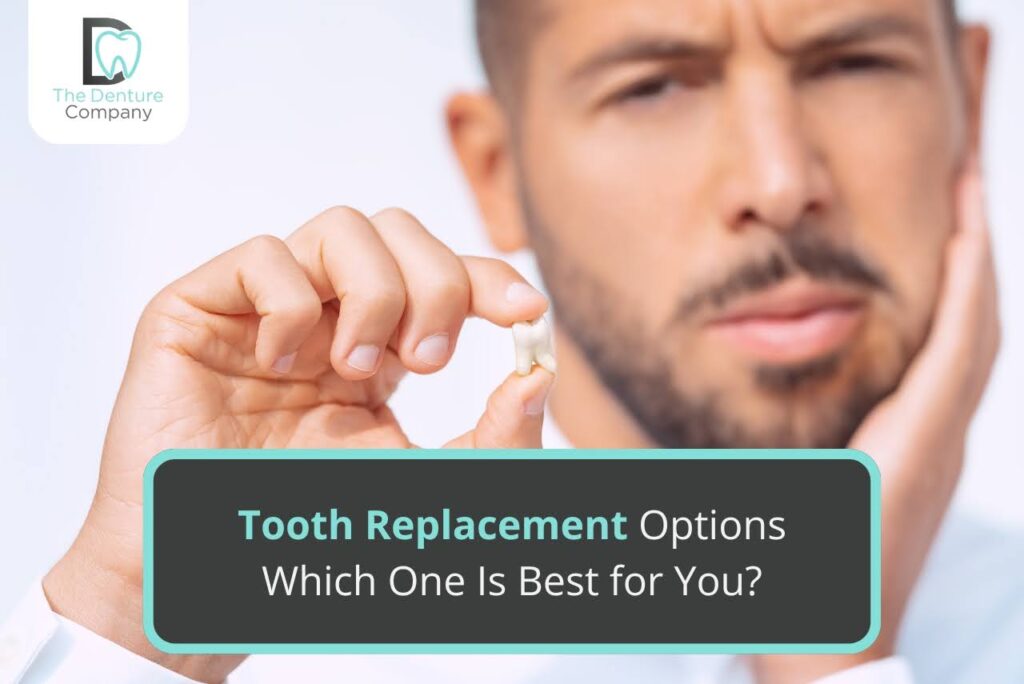
Tooth Replacement Options: Which One Is Best for You?
Losing a tooth is more than just an aesthetic problem as it affects your confidence, ability to chew, speech, and in case you don’t replace it in time, it can lead to bone loss and tooth shifting. With an emergency extraction or a tooth removed after years of wear and tear, a person is presented with multiple tooth replacement options that can both preserve a person’s smile and safeguard their health.
This guide compiles all the major methods of tooth replacement and explains in what scenario and why a tooth has to be extracted. I hope I can help you come to a decision you believe is best for you. No matter whether you’re from Idaho or exploring options from anywhere in the country, I hope I can help you come to a decision you believe is best for you.
For patients in Nampa, Idaho, The Denture Company has personalized tooth extraction and affordable denture services that cater to your individual requirements, simplifying and making the process of tooth replacement more comfortable.
When Do You Need to Extract a Tooth?
Tooth extraction isn’t just about visible damage. Many people delay the decision, hoping things will improve. But dental infections, fractures, or crowding can make it unsafe to wait. According to the Mayo Clinic, common reasons for extraction include:
- Severe decay or infection
- Gum disease that loosens the tooth
- Overcrowding (especially before braces)
- Cracked or broken tooth beyond repair
- Impacted wisdom teeth
Left untreated, these problems may lead to abscesses, jawbone loss, or even systemic infection. That’s why understanding your replacement options early before or right after an extraction is key.
Why You Shouldn’t Delay Tooth Replacement
After you extract a tooth, the surrounding jawbone immediately begins a slow process of shrinking, known as bone resorption. According to the National Institute of Dental and Craniofacial Research (NIDCR), within the first year after an extraction, you can lose up to 25% of the bone volume in that area.
This crowding or spacing increases the risk of cavities and gum disease in adjacent teeth. Additionally, the imbalance puts extra strain on your jaw joints, potentially leading to discomfort or TMJ disorders. On a personal level, the aesthetic impact of a missing tooth can chip away at self-confidence, making people hesitant to smile or speak in public. The good news is that early intervention whether it’s planning for dentures, implants, or other restorative options not only preserves your oral health but also tends to be more cost-effective than delayed treatment. NIDCR
What Are Your Tooth Replacement Options?
Choosing the right teeth replacement method depends on your oral health, jawbone strength, budget, and personal goals. Let’s break down the top five:
1. Dental Implants
Best For: Long-term durability, natural look, single or multiple missing teeth
Dental implants are widely considered the gold standard in tooth replacement. A titanium post is surgically placed in the jawbone to act as a root, topped with a custom crown. Over time, the implant fuses with the bone through a process called osseointegration.
Benefits:
- Long-lasting (20+ years)
- Prevents bone loss
- Doesn’t affect nearby teeth
- Feels and functions like a natural tooth
Risks/Limitations:
- Requires surgery and healing time
- Higher initial cost
- Needs sufficient bone density
The Cleveland Clinic confirms that implants have one of the highest success rates in dentistry up to 98%.
2. Fixed Dental Bridges
Best For: Replacing one to three adjacent teeth without surgery
Bridges are anchored to the natural teeth on either side of the gap. These anchor teeth are shaved down and covered with crowns, with the “bridge” tooth (pontic) filling the space between.
Benefits:
- Non-surgical and quicker than implants
- Less expensive than implants
- Can look natural with porcelain materials
Risks/Limitations:
- Requires altering healthy teeth
- Risk of decay under crowns
- Doesn’t prevent bone loss in the gap
According to the American Dental Association (ADA), bridges typically last 5–15 years with proper care.
3. Partial Dentures
Best For: Multiple missing teeth, especially in different areas
Removable partial dentures use a metal or acrylic base with artificial teeth, often held in place with clasps that grip surrounding teeth.
Benefits:
- Affordable
- Non-invasive
- Easy to adjust or remake
Risks/Limitations:
- May feel bulky or uncomfortable
- Can slip while eating or talking
- Needs daily cleaning
The Denture Company in Nampa specializes in custom partial dentures that fit comfortably and look natural, all at an affordable price.
4. Full Dentures
Best For: Complete tooth loss on upper, lower, or both arches
When you’ve lost all your teeth, full dentures can restore function and appearance. They’re custom molded to your gums and held in place via suction, adhesives, or implants.
Benefits:
- Non-surgical
- Can be made quickly
- Improved aesthetics and speech
Risks/Limitations:
- Can loosen over time
- May cause sore spots or gum irritation
- Regular relining may be needed due to jawbone changes
According to HRSA, full dentures are often essential for restoring health and dignity in seniors facing total tooth loss.
5. Implant-Supported Dentures
Best For: Stability and confidence with full dentures
If you want the security of implants but need to replace a full arch of teeth, implant-supported dentures combine both. A few implants (usually 2–6) anchor a denture that snaps into place.
Benefits:
- Doesn’t slip or wobble
- Better chewing power
- Prevents jawbone shrinkage
Risks/Limitations:
- Higher cost
- Requires surgery
- May take several months to complete
For those needing full dentures, The Denture Company provides expert fittings and ongoing care to ensure your dentures stay comfortable and functional.
What If You Can’t Afford Tooth Replacement?
You’re not alone. Dental costs can be a burden but you still have options:
- Medicaid: Coverage varies by state, but emergency tooth extraction is often covered. Visit Medicaid.gov.
CMS Medicare: Original Medicare doesn’t cover routine dental, but some Medicare Advantage plans may. - Federally Qualified Health Centers: These clinics offer sliding scale fees. Use HRSA’s locator to find one near you.
- NIH Clinical Trials: Some dental research centers offer free or reduced-cost care for participants.
The Denture Company is committed to affordable dentures in Nampa and offers flexible payment plans to help you get the care you need without breaking the bank.
How Long Can You Wait to Replace a Tooth?
Every week counts. After you extract a tooth, bone starts to shrink within months. According to the National Institute of Dental and Craniofacial Research (NIDCR), the surrounding tissue and bone begin to deteriorate almost immediately.
Delaying too long can lead to:
- Bone grafting needs
- Complex procedures
- Misalignment of other teeth
- Speech and chewing issues
Even if you’re not ready for a full replacement, ask your dentist about a temporary flipper or spacer to protect your smile.
What’s the Safest Tooth Replacement for You?
There’s no one-size-fits-all answer. But here’s a quick guide:
- Best for Long-Term Investment: Dental Implants
- Best for Quick Fix: Bridges or Partial Dentures
- Best for Full-Mouth Replacement: Implant Dentures
- Best for Tight Budget: Removable Dentures
- Best for Stability: Implant-Supported Options
If you’re unsure, consult a licensed dentist who can assess your gums, jawbone, and overall health to help you choose. The American Academy of Pediatric Dentistry (AAPD) also recommends early intervention for children or teens missing teeth due to trauma or genetics.
What to Ask Your Dentist Before Choosing a Replacement
- Will this option preserve my bone?
- How long will it last with my lifestyle?
- Is there a payment plan or community discount?
- Are there risks with my health conditions?
- What happens if I do nothing?
Being informed helps you take ownership of your dental health and avoid decisions made under pressure or fear.
Comparing Tooth Replacement Options
| Option | Longevity | Surgery Required | Bone Preservation | Maintenance |
| Implants | 20+ years | Yes | Excellent | Low |
| Bridges | 5–15 years | No | Minimal | Moderate |
| Partial Dentures | 5–10 years | No | None | High |
| Full Dentures | 5–10 years | No | None | High |
| Implant Dentures | 10–20 years | Yes | Good | Moderate |
Final Thoughts: Protecting Your Smile Starts with Action
Tooth loss is more common than people think, but it doesn’t mean someone is lazy or unhealthy. It just means that the next steps are important. Choosing between implants, bridges, or dentures is a personal choice. It should be made medically, without pressure from shame or sales tactics. With the proper care plan, along with community support, you will be able to recover your smile, bite, and confidence.
Frequently Asked Questions (FAQ)
1. What is the most natural-looking tooth replacement option?
Dental implants are designed to look, feel, and function like your natural teeth
2. How soon should I replace a tooth after extraction?
If you are planning to get a dental implant after a tooth extraction, you will typically need to wait a minimum of 10 weeks after the tooth extraction before dental implants can be placed.
3. Can I replace multiple missing teeth at once?
Yes, it is possible to replace multiple missing teeth at once. Dental implants, bridges, and implant-supported dentures are common solutions for replacing multiple missing teeth.
4. Are dentures my only option if I’ve lost all my teeth?
No, dentures are not the only option for replacing all of your lost teeth.5. What’s the cheapest tooth replacement?
Cost-Effective: Partial dentures are generally the cheapest option for tooth replacement