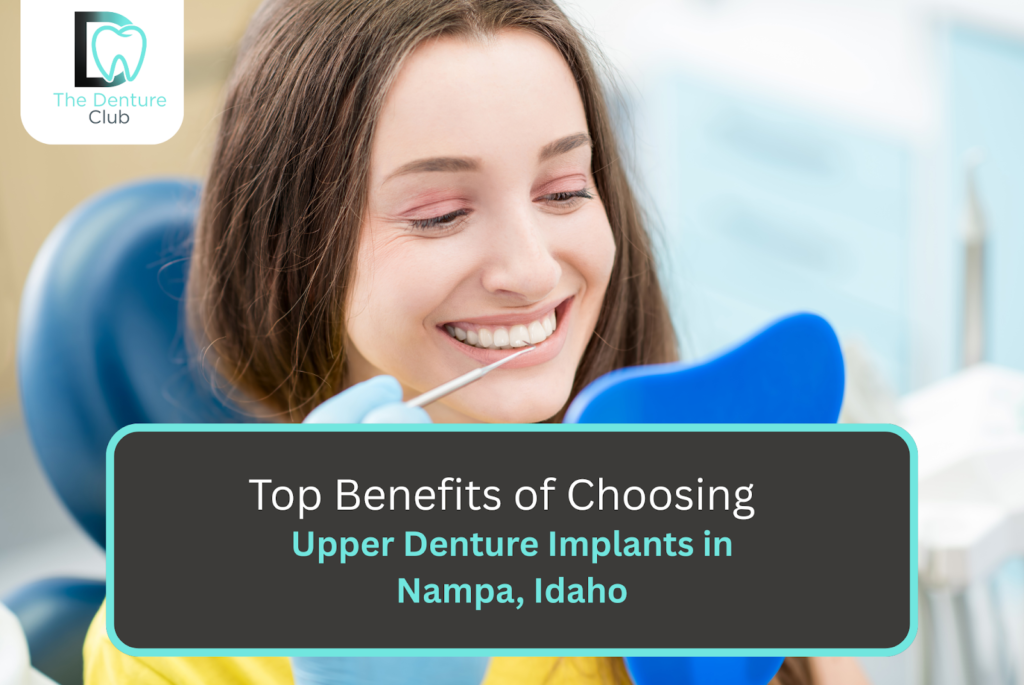
When considering dental restoration options, many residents turn to traditional dentures. But for those seeking stability, comfort, and a natural look, upper denture implants in Nampa, Idaho, have become the preferred solution. These implants are designed to secure your dentures directly into the jawbone, offering an experience far superior to conventional dentures.
A few years ago, one of our patients, Mrs. Thompson, struggled with ill-fitting upper dentures. She experienced difficulty eating, speaking, and even smiling confidently at family gatherings. After her dentist recommended upper denture implants in Nampa, Idaho, her life transformed. Today, she enjoys meals without hesitation, speaks clearly, and smiles confidently, all thanks to the stability and natural feel provided by implants. Her story highlights how this advanced dental solution can restore quality of life in ways traditional dentures cannot.
Imagine biting into your favorite crunchy apple without a second thought; that’s the freedom upper denture implants in Nampa, Idaho can give you!
In this blog, we’ll explore the top benefits of upper denture implants in Nampa, Idaho, and give detailed guidance for planning, care, and maximizing long-term success. Now, let’s dive into the transformative benefits of upper denture implants and see how they can completely change your smile and confidence!
1. Superior Stability Compared to Traditional Dentures
One of the most significant advantages of upper denture implants is stability. Unlike traditional dentures, which rely on suction or adhesives, implants are anchored directly to the jawbone, preventing shifting or slipping.
Why this matters:
- No more worries about dentures moving while eating or talking
- Reduced irritation and sore spots in the gums
- Improved confidence in public and social situations
When dentures rest on the gums, they can shift or cause friction, leading to discomfort and sometimes even minor injuries to soft tissue. Upper denture implants in Nampa, Idaho, attach to dental implants placed in the upper jaw, creating a fixed and secure foundation. This allows patients to eat a wider variety of foods comfortably, speak naturally, and maintain normal oral function without the fear of dentures slipping.
Patient Example: A patient who previously avoided crunchy foods like apples or nuts found that implant-supported dentures allowed her to enjoy meals again, highlighting the functional and psychological benefits of stability.
2. Preservation of Jawbone Health
Traditional dentures do not stimulate the jawbone, often leading to bone resorption over time. Upper denture implants in Nampa, Idaho, provide essential stimulation to the jawbone, preventing deterioration.
Benefits of jawbone preservation:
- Maintains facial structure and prevents sunken appearance
- Reduces long-term oral health issues caused by bone loss
- Supports surrounding teeth and improves overall oral function
When a tooth is lost, the jawbone underneath can begin to shrink due to a lack of stimulation. Implants act like natural tooth roots, transferring chewing forces to the bone and preserving its density and shape. This not only helps maintain a youthful facial appearance but also supports the longevity of the denture itself.
Long-term advantage: Patients who receive implants maintain their facial structure and enjoy a more natural smile, preventing the common problem of sagging cheeks seen in long-term denture wearers.
3. Enhanced Comfort and Natural Feel
Upper denture implants in Nampa, Idaho, are designed to mimic the natural function and feel of teeth. Unlike traditional dentures, they do not press down on the gums or require messy adhesives.
Comfort benefits include:
- No gum irritation or pressure sores
- Ability to speak without clicking or shifting dentures
- No adhesives or paste required for daily use
Implant-supported dentures distribute chewing forces evenly across the jawbone, reducing localized pressure. This creates a comfortable experience where the patient feels as though they are using natural teeth. Additionally, because the implants are fixed, speech patterns remain unaffected, allowing clear and confident communication.
Patient Insight: Many patients report that after transitioning to upper denture implants, their speech improved immediately, with no clicking noises or slippage that previously caused embarrassment.
4. Improved Chewing Efficiency and Diet Flexibility
Traditional dentures often limit the types of foods that can be eaten safely. With upper denture implants in Nampa, Idaho, patients regain the ability to chew more efficiently, allowing a more balanced diet.
Key dietary advantages:
- Eat hard, crunchy, or chewy foods safely
- Enjoy fruits, vegetables, and protein-rich foods without difficulty
- Reduce digestive issues caused by insufficiently chewed food
Implant-supported dentures function more like natural teeth, providing bite strength and stability that traditional dentures cannot match. This enables patients to enjoy a variety of textures and flavors, contributing to overall nutrition and health.
Clinical Insight: Dentists often observe that patients with implant-supported dentures report higher satisfaction with their daily meals and improved digestion due to proper chewing.
5. Long-Term Cost-Effectiveness
While the initial investment for upper denture implants in Nampa, Idaho, may be higher than traditional dentures, they often prove more cost-effective over time.
Why implants save money:
- Fewer replacements compared to conventional dentures
- Reduced need for adhesives and repair materials
- Lower risk of gum irritation and related dental procedures
Traditional dentures may need to be replaced every 5-7 years due to wear and changes in jawbone shape. Implants, however, are designed to last decades with proper care. While initial costs may seem higher, the long-term savings on replacements, maintenance, and associated health issues often offset the investment.
Patient Story: Mr. Allen, who received implant-supported upper dentures five years ago, noted that he avoided two full sets of traditional dentures in that time, saving both money and discomfort.
6. Boosted Confidence and Self-Esteem
Dental health significantly impacts self-confidence. Patients with missing teeth or unstable dentures often feel self-conscious. Upper denture implants in Nampa, Idaho, restore the natural smile, improving self-esteem.
Confidence benefits include:
- Smiling freely without fear of slipping dentures
- Speaking clearly in professional and social situations
- Enhanced social interactions and quality of life
The psychological impact of a stable and natural-looking smile cannot be overstated. Implant-supported dentures help patients feel whole again, allowing them to participate in social activities, job opportunities, and personal relationships without hesitation.
7. Reduced Risk of Gum Irritation and Sores
Traditional dentures can cause friction, leading to painful sores. Implant-supported dentures anchor securely, significantly reducing this risk.
Benefits:
- Less gum inflammation and irritation
- Reduced risk of infections from chronic sores
- No need for adhesive creams or powders
Because implants integrate with the jawbone, dentures remain stationary. This eliminates the rubbing and sliding that commonly occur with traditional dentures, protecting sensitive gum tissue and promoting healthier oral conditions.
Table: Types of Upper Denture Implants and Their Features
| Type of Implant | Description | Pros | Considerations |
| Single Tooth Implants | Individual titanium posts replace one missing tooth | Highly natural appearance, preserves bone at a single site | Requires enough bone density; multiple implants are needed for a full arch |
| Implant-Supported Overdentures | Denture snaps or attaches to 2-4 implants | Removable, stable, easier cleaning, cost-effective | May still shift slightly, needs routine adjustments |
| Fixed Implant-Supported Dentures | Permanently attached denture to 4-6 implants | Feels like natural teeth, maximum stability, long-term durability | Higher cost, requires precise planning, cannot be removed without a dentist |
| All-on-4 / Full-Arch Implants | Full upper arch supported by 4 strategically placed implants | Minimal implants for full arch, strong support, shorter treatment time | Not suitable for severely resorbed jawbones; surgical expertise required |
| Zygomatic Implants | Longer implants anchored in the cheekbone for severe bone loss | Bypasses bone grafting, allowing upper denture placement in difficult cases | Advanced procedure, limited availability, higher cost |
This table educates patients on all implant options for upper dentures, helping them make informed decisions about their treatment.
Planning for Upper Denture Implants
A successful implant experience involves careful planning. Denturists at The Denture Club guide patients through the following steps:
Step 1: Consultation and Examination
- Full oral examination, X-rays, and jawbone assessment
- Discuss patient needs, goals, and expectations
Step 2: Treatment Planning
- Determine the number and placement of implants
- Decide on the type of upper denture (fixed or removable implant-supported)
Step 3: Implant Placement
- Surgical insertion of titanium implants into the jawbone
- Healing period (osseointegration) to allow bone integration
Step 4: Denture Attachment
- Custom-fitted denture attached securely to implants
- Adjustments made for comfort and bite alignment
Step 5: Follow-Up Care and Maintenance
- Routine checkups to ensure implant stability
- Daily oral hygiene guidance for longevity
Caring for Upper Denture Implants
Proper care ensures the long-term success of implants:
- Brush implants and dentures daily with non-abrasive toothpaste
- Floss around implant posts to prevent gum disease
- Visit your dentist for routine checkups every 6 months
- Avoid hard or sticky foods that can damage dentures
Conclusion
Choosing upper denture implants in Nampa, Idaho, offers numerous benefits: superior stability, jawbone preservation, enhanced comfort, improved chewing, long-term cost-effectiveness, boosted confidence, and reduced gum irritation. By following the treatment and care guidance outlined here, you can enjoy a healthier, more functional, and natural smile that lasts for years.
Restore your smile and confidence today with The Denture Club. Schedule your consultation for upper denture implants in Nampa, Idaho, and experience lasting comfort!
FAQs
1. How do upper denture implants prevent bone loss compared to traditional dentures?
Implants mimic natural tooth roots, stimulating the jawbone during chewing. This prevents the bone resorption commonly seen with traditional dentures, preserving facial structure and long-term oral health.
2. Can patients with minimal jawbone density still receive upper denture implants?
Yes, options like zygomatic implants or bone grafting allow patients with limited bone to receive implant-supported dentures safely, avoiding the need for removable, unstable dentures.
3. How long do upper denture implants typically last?
With proper care, implant posts can last decades, while the attached dentures may require minor adjustments or replacement every 10–15 years, making them more cost-effective than traditional dentures in the long term.
4. Are there dietary restrictions after receiving upper denture implants?
During the initial healing period, softer foods are recommended. After full integration, patients can chew most foods comfortably, including hard and fibrous items, unlike traditional dentures, which limit diet.
5. How does implant placement affect speech and pronunciation?
Secure implants prevent denture slippage, allowing clear, natural speech. Unlike traditional dentures, implants avoid clicking sounds or altered tongue placement, enhancing verbal confidence in social and professional settings.